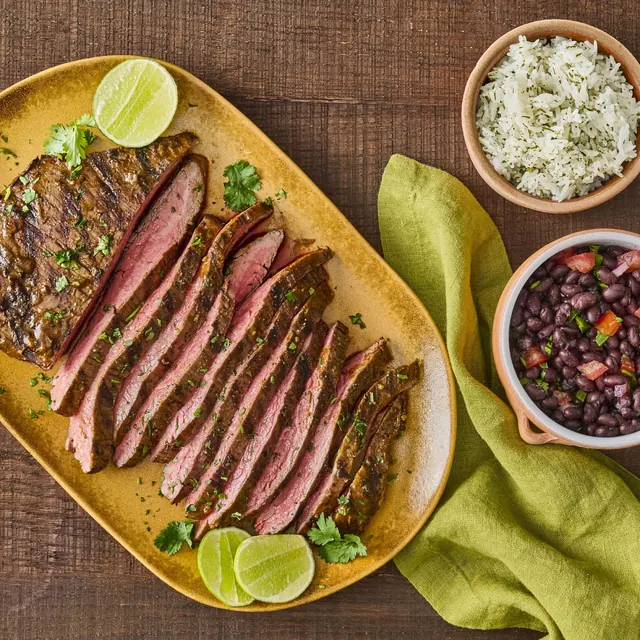
Carne asada night works best when the steak, seasoning and serving plan are ready together. Choose a cut you can cook evenly, give the surface room to brown, and slice across the grain. Warm tortillas and a few fresh toppings will do more for the meal than a crowded table of competing sauces.
Lawry's Casero Carne Asada Seasoning brings garlic, cumin, oregano and red pepper to the pan or grill. We recommend treating it as the savory foundation, then adjusting the rest of the dinner around it. This guide takes you from choosing the meat to making useful leftovers, with a skillet option when outdoor cooking is not possible.
Choose a cut you can handle comfortably
Skirt and flank steak are familiar choices for this style of dinner. Both have visible muscle fibers, which makes the final slicing step important. Look at the direction of those fibers before cooking; it is easier to understand the grain while the surface is still plain.
Choose a piece that fits your equipment. A long skirt steak can be divided into manageable sections before seasoning. A large flank steak may suit a spacious grill better than a small skillet. If you are working indoors, cook in batches instead of folding the meat or packing several pieces into a pan.
Thickness matters more than a fixed number of minutes. Thin ends can finish before a thicker center. Keep track of those areas, and use a food thermometer rather than a promised cooking time. You can move a thinner section away from the strongest heat while the rest continues cooking.
| Choice | Helpful preparation | What needs attention |
|---|---|---|
| Skirt steak | Divide long pieces to fit the cooking surface | Thin sections can cook quickly; identify the grain |
| Flank steak | Keep the broad surface evenly seasoned | Check the thickest area with a thermometer |
| Small skillet | Prepare several manageable portions | Cook in batches to avoid crowding |
| Outdoor grill | Prepare hotter and cooler areas where possible | Move food away from flare-ups |
Let the blend carry the base seasoning
The current Carne Asada formula contains salt, garlic, spices including cumin, oregano and red pepper, sugar, citric acid, yeast extract, natural flavor, an anticaking agent and paprika extract. That combination already brings several elements to the meat. A separate handful of salt or another all-purpose blend may be unnecessary.
Check the bottle's preparation directions and use them as your starting point. Measure what you use so you can repeat a result you enjoy. Coat the surface evenly; a concentrated patch of seasoning will taste different from the surrounding meat even if the total quantity seems reasonable.
Oil can help distribute a dry seasoning over the surface. Use enough to make an even coating rather than creating a pool. If you add lime, remember that the blend already includes citric acid. Serving lime wedges at the table lets you bring brightness to the finished taco without committing the whole steak to a very acidic marinade.
Marinate with a clear purpose
A marinade offers a convenient way to coat the meat and coordinate preparation. It does not replace safe handling or guarantee tenderness. Do not assume that leaving meat in an acidic mixture for as long as possible will improve the result. Follow the recipe or package directions for your chosen preparation.
Use a covered food-safe container or suitable sealed bag, place it on a tray to contain leaks, and keep it refrigerated. Reserve any clean portion intended as a serving sauce before it touches raw meat. Keep the used marinade away from the finished steak and fresh toppings.
“Always marinate meat and poultry in the refrigerator, not on the counter.”
USDA Food Safety and Inspection Service
If dinner is coming together without a marinade, you can still season the surface and cook. Organizing the toppings and preparing the equipment are more useful than rushing to invent an elaborate liquid mixture at the last minute.
Prepare the taco table before cooking
Steak does not need to wait while everyone searches for plates or chops an onion. Set out the serving dishes first. Chop onion and cilantro, wash any salad vegetables, cut lime wedges, and prepare salsa. Keep perishable toppings refrigerated until you are ready to serve them.
Choose a small group of accompaniments with different jobs. Onion gives crunch, cilantro brings freshness, and lime adds acidity. Avocado provides a softer contrast. You may prefer a simple tomato salsa or a hotter chile sauce, but putting both on every taco can hide the seasoning you chose.
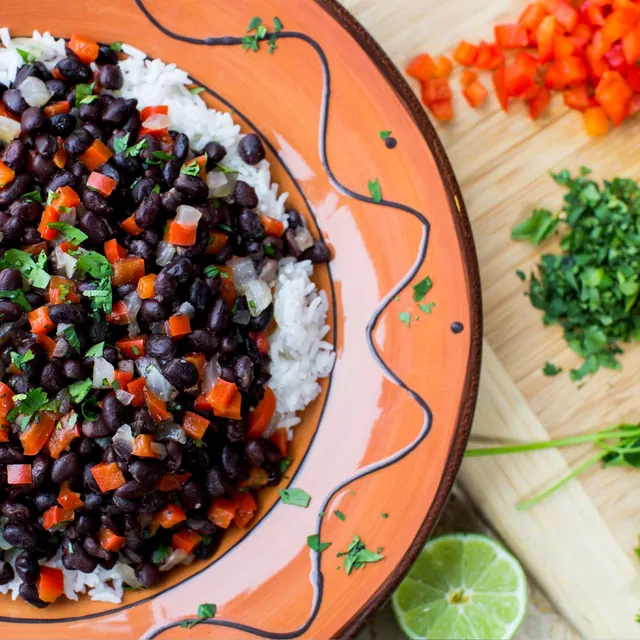
Rice and beans turn a taco spread into a fuller dinner. Keep at least one side gently seasoned so there is a calm part of the plate. If you want help choosing a blend for the beans, our weeknight seasoning guide compares Total Seasoning, Adobo and Carne Asada.
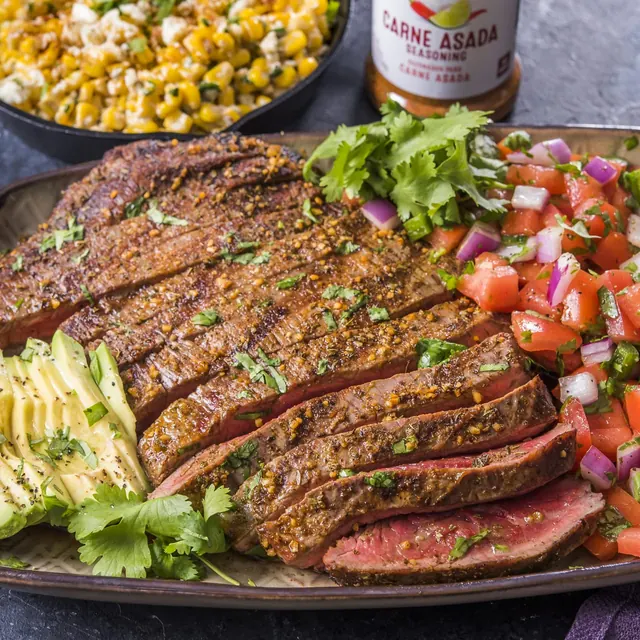
Give the meat a surface that can brown
Preheat the grill or skillet before adding the steak. A wet surface and a crowded cooking area can make browning more difficult. Let excess marinade drip away, and avoid transferring a puddle into the pan. You want contact between meat and the hot surface, with room for released moisture to escape.
On a grill, keep a cooler area available if your equipment allows it. Move food away from flames rather than letting a flare-up blacken the seasoning. In a skillet, leave space between portions. If the pan is small, a second batch is more practical than trying to cook everything at once.
Watch the coating as well as the meat. Seasoning can darken before the center reaches its safe temperature. Reduce the heat or move the steak to a gentler area if needed. Deeply browned edges can be appealing; a burnt coating brings bitterness and will not tell you whether the inside is ready.
Use temperature, then allow the rest
For beef steaks, federal guidance calls for a minimum internal temperature of 145°F, followed by at least three minutes of rest before carving or eating. Ground beef has a different minimum, 160°F. If you adapt the meal to chicken, the minimum is 165°F. These numbers refer to the food itself, measured with a thermometer.
| Protein | Minimum temperature | Rest requirement |
|---|---|---|
| Beef steak | 145°F / 63°C | At least 3 minutes |
| Ground beef | 160°F / 71°C | No rest time specified in the federal chart |
| Chicken, including ground chicken | 165°F / 74°C | No rest time specified in the federal chart |
| Reheated leftovers | 165°F / 74°C | Check the food throughout |
Source: FoodSafety.gov safe minimum internal temperature chart. For thin cuts, a thermometer inserted from the side can help you reach the center. Avoid judging doneness from the darkness of the spice coating.
Transfer cooked meat to a clean platter. The plate that held raw steak should not become the serving plate without washing. Use the resting interval to warm tortillas and bring the toppings to the table, so the meal comes together without cutting the rest short.
Slice across the grain
Find the lines of muscle fibers again and position your knife across them. Cutting perpendicular to those lines shortens the fibers in each bite. If a large piece is awkward, divide it into sections first, then turn each section so you can slice it in the right direction.
Thin slices are easier to arrange in a small tortilla than a few large chunks. After slicing, you can cut the strips into shorter pieces for easier eating. Keep the size consistent enough that each taco has a comfortable bite rather than a mixture of tiny scraps and long strands.
Taste a cooked piece with a little tortilla and your chosen topping before deciding that the meat needs more seasoning. A taco is a combined bite. The salsa, cheese or other accompaniments may provide all the additional salt or acidity you need.
Warm tortillas and build a balanced bite
Warm tortillas according to their package directions, using a skillet or another appropriate method. Keep them covered in a clean towel or tortilla warmer while you finish the meal. Work in small batches if necessary so the last tortillas do not sit uncovered and dry out.
Use enough filling to make the taco satisfying without making it difficult to fold. A little onion and cilantro often leave more room for the steak's flavor than a thick layer of toppings. Offer lime and salsa separately, especially when guests prefer different levels of heat.
For a vegetable side, browned peppers, a crisp cabbage salad or simply cooked corn can fit naturally. They do not all need Carne Asada seasoning. A lighter accompaniment can make the seasoned meat stand out more clearly.
Troubleshoot the meal you actually cooked
If the steak tastes salty, check the combination of blend, marinade and toppings before changing the cooking method. Next time, reduce one salty ingredient rather than removing every source of flavor. Fresh onion, plain rice and unsalted sides can help balance the current plate, although they do not remove salt from the meat.
If the surface looks pale, consider moisture and crowding. Let excess marinade drain and give the next batch more room. If the coating burns, use less aggressive heat and watch the thinner sections. If a bite feels chewy, examine your slicing direction as well as the cut and its thickness.
Keep a short note of what you used and how you cooked it. The cut, thickness, seasoning quantity and equipment tell you much more than a vague promise to “grill it better” next time.
Give leftovers a different second meal
Refrigerate leftovers promptly in shallow containers. USDA advises doing so within two hours, or within one hour when the temperature is above 90°F. Use refrigerated leftovers within three to four days, or freeze them for longer storage. See USDA's leftover guidance.
Reheat leftover steak to 165°F and pair it with a fresh component: rice and avocado, a baked potato with salsa, or a bowl of beans with cabbage. Do not add more seasoning automatically. For a wider choice of supporting flavors, explore our pantry essentials guide and individual spices and herbs.
Prices are checked amounts and may change. Confirm the selected size, seller, delivery availability and final price in the purchase tab before ordering. Local grocery offers depend on your delivery address.